
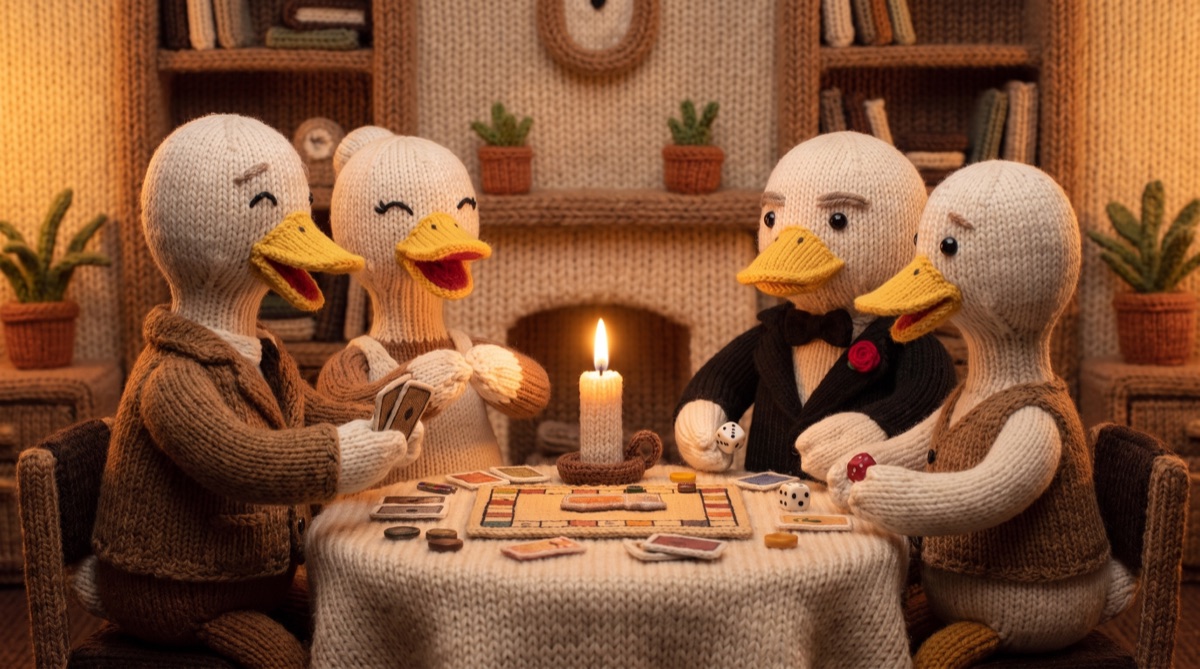
Big party games get all the attention, but some of the best game nights happen with just four or six people around a kitchen table. Double dates don't have to mean another restaurant — here's how to turn a small group into a great game night.
Why Small Groups Are Secretly Better
With twenty players, every game becomes a spectacle; with four to six, it becomes a conversation. Nobody hides in the crowd, every vote matters, and the bluffs get personal — because everyone at the table knows exactly how you smile when you lie. Small groups also mean zero downtime: you're never waiting through eight other turns to play. If your game nights have felt flat, the fix might not be more games. It might be fewer people.
Games That Shine with Exactly Four
Four players is a magic number for deduction games — an impostor round with four people means suspicion has nowhere to hide, and every hint gets dissected. It's also perfect for team formats: couple versus couple turns any trivia or guessing game into a friendly rivalry with built-in stakes. The classic mistake is playing games designed for crowds and wondering why they drag; pick formats where four voices are a feature, not a shortage.
Couple vs. Couple: The Competitive Route
Playing as teams changes the psychology completely: suddenly it's not about you winning, it's about the two of you winning. Guessing games where partners have to predict each other's answers are brutal fun on double dates — you learn exactly how well the other couple knows each other, and occasionally that you don't know your own partner as well as you thought. Keep score across the whole night and let the losing couple host next time.
The Cooperative Route (for Sore Losers)
Some couples should not be on opposite teams, and everyone knows a pair whose competitive streak once ruined a pleasant evening. Cooperative and social formats fix this: everyone versus the game, or rotating roles so alliances never harden. Deduction games are ideal because the 'teams' reshuffle every round — this round's impostor is next round's detective, and nobody goes to bed angry about a trivia question from 10 PM.
Games That Start Conversations
The best double-date games are the ones you're still talking about after the game ends. Would-you-rather dilemmas, fact-or-fiction rounds where you have to guess which story from someone's life is invented, questions you'd never ask over dinner — these formats do the social work for you. A good dilemma question at the table beats an hour of small talk, and you leave actually knowing the other couple better.
One Phone Is All You Need
Small-group game nights work best when the setup is zero: no board to unbox, no cards to shuffle, no rulebook to summarize while everyone's drinks go warm. An app like Kwako keeps a whole shelf of party games on one phone — impostor rounds, would-you-rather, fact or faker, truth or dare — all built for groups as small as three. Pass the phone, pick a mode, and the evening runs itself.
Date night doesn't need a reservation. Four people, one table, and a good game beat most restaurants — and unlike dinner, the stories from game night get better every time you retell them. Invite that couple you've been meaning to see, and let the games do the rest.



Comments
Loading comments...