
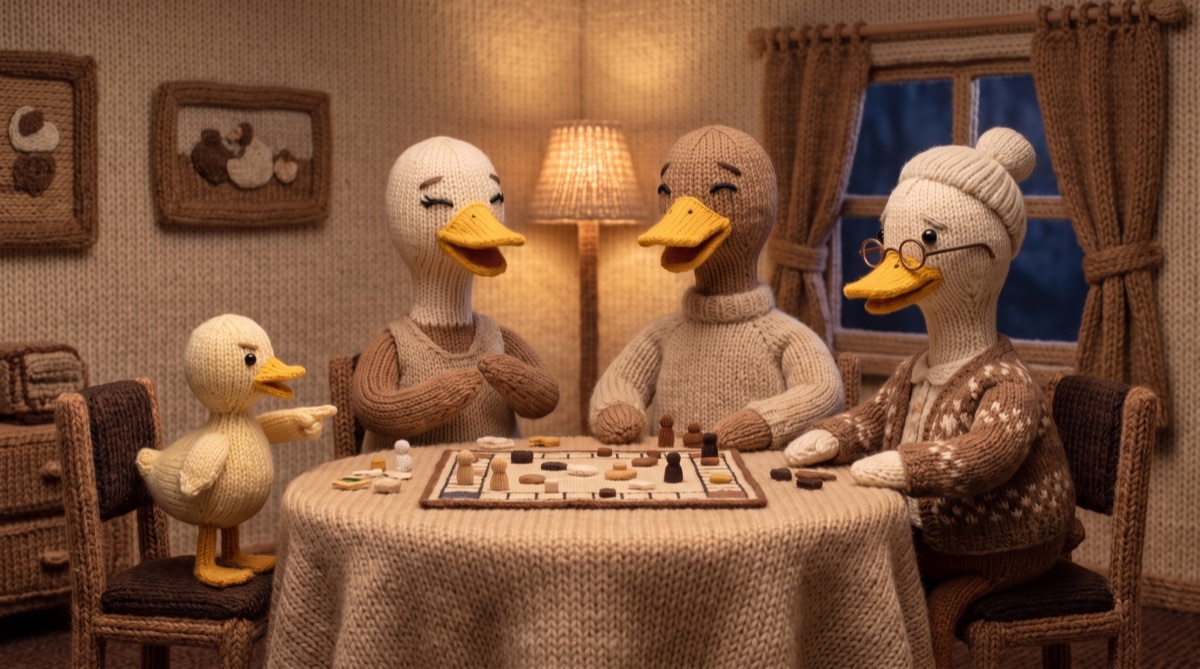
The hardest audience in gaming isn't a tournament — it's a living room holding a seven-year-old, two tired parents, a teenager who'd rather be anywhere else, and a grandmother who hasn't played anything since canasta. Here's how to pick games where all of them genuinely compete, and how to turn one good night into a tradition.
The Age-Proof Test
A game works across generations when it passes three checks: no reading speed required, no reflexes required, and no pop-culture knowledge required. Trivia fails the third check instantly — grandpa crushes history, the kids crush cartoons, and nobody competes on the same field. Social games pass all three: bluffing, guessing, and reading faces are skills a seven-year-old and a seventy-year-old both own. In fact, grandparents are often terrifyingly good at spotting liars. They've had practice.
Explain It in One Breath
The moment a rules explanation needs a second breath, you've lost the youngest and oldest ends of the table. Great family games fit in a sentence: 'Everyone knows the word except one person — figure out who.' 'Answer honestly or do the dare.' 'Would you rather this or that, and guess what mom picked.' One-breath rules mean grandma's first round is as fair as the teenager's fifth, and nobody spends the evening asking what's happening.
Let the Kids Lose (Sometimes)
The instinct to let children win every round is a mistake — kids know when a win is fake, and manufactured victories teach them the game is rigged in a way losing never does. The better gift is a game where they can win for real. Deduction games are perfect: children are naturally suspicious, shameless accusers, and shockingly good impostors, because adults consistently underestimate them. The first time a nine-year-old wins a bluffing round against the whole family, honestly, is a core memory for everyone at the table.
One Screen Together Beats Five Screens Apart
Screens usually get blamed for killing family time, but the problem was never the screen — it's the one-screen-per-person part. A single phone passed around the table inverts the dynamic: the device becomes the deck of cards, not the escape hatch. Everyone looks at the same thing, laughs at the same reveal, and argues about the same vote. Kwako leans into exactly this — one phone, pass it around, and the teenager's device finally works for the family instead of against it.
Make It a Ritual, Not an Event
One-off game nights are fun; recurring ones are family infrastructure. The formula that sticks: same night each week or month, rotating who picks the first game, one snack that only appears on game night, and a running score nobody takes seriously but everybody remembers. Keep sessions short enough to end while everyone still wants one more round — a family that stops playing at the peak comes back; a family that plays until the youngest melts down doesn't.
Family game night isn't really about the games — it's the one hour where three generations compete as equals and the phone gets passed instead of stared at. Pick games with one-breath rules, let the kids win for real, and put it on the calendar. The tradition matters more than the score.



Comments
Loading comments...